Spring Snow, Hidden Trouble: Protecting Your Colorado Springs Home from Spring Water Damage

The "Spring Swing" is officially here in the Pikes Peak region. Just last week, Colorado Springs and the Front Range were hit with wet May snow, followed by the inevitable sunshine and rapid melt our city is famous for.
While this moisture is a welcome relief for our local drought conditions, it presents a unique set of challenges for homeowners. When several inches of heavy snow sit on your roof or against your foundation and then melt in a matter of hours, that water has to go somewhere—and unfortunately, "somewhere" is often inside your home.
The Spring Melt: A Recipe for Water Intrusion
In Colorado Springs, our spring water damage usually comes from three main culprits:
Saturated Soil & Seepage: As the ground thaws and absorbs the heavy snowmelt, hydrostatic pressure can push water through tiny cracks in your basement or crawlspace walls.
Ice Dams & Heavy Snow Load: That wet May snow is incredibly heavy. It can pull on gutters and create ice dams that force melting water under your shingles and into your attic.
The Freeze-Thaw Cycle: With daytime highs in the 50s and overnight lows hitting freezing, pipes in exterior walls or crawlspaces are at their most vulnerable.
The 48-Hour Rule: Why "Air Drying" Isn't Enough
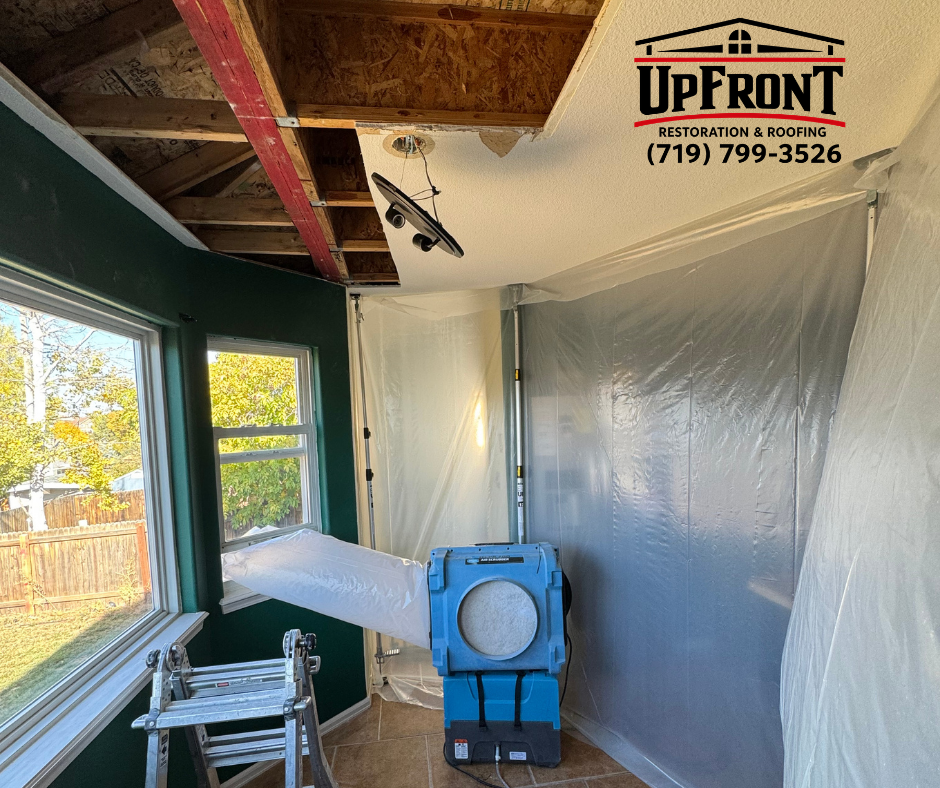
If you’ve discovered a damp spot in the basement or a stain on the ceiling, the clock is ticking. Mold spores can begin to colonize in as little as 24 to 48 hours. Simply opening a window or putting a household fan on a wet carpet isn't enough to prevent mold. Professional water drying is about more than just surface moisture; it’s about "structural drying." We use industrial-grade dehumidifiers and high-velocity air movers to pull moisture out of the drywall, subfloors, and studs where mold loves to hide.
Mold Remediation: More Than Just a Cleaning Job
If you do find mold, don't reach for the bleach. In fact, many DIY cleaning methods can actually spread mold spores further into your HVAC system and other rooms.
Proper Mold Remediation involves:
Containment: Using HEPA filtration and physical barriers to ensure spores don't travel.
Filtration: Scrubbing the air to remove microscopic irritants.
Removal: Safely disposing of "porous" materials (like drywall or insulation) that cannot be fully cleaned.
Anti-Microbial Treatment: Treating the area to prevent future growth.

Local Warning Signs to Watch For
Keep an eye out for these "Spring Snow" red flags:
The "Musty" Smell: A damp, earthy odor that gets stronger when the sun comes out.
Bubbling Paint: A sign that moisture is trapped behind your drywall.
Soft Spots: If your baseboards or flooring feel "spongy" after a storm.
Pro Tip: Don't wait for a puddle to form. In Colorado Springs, the most dangerous water damage is often the kind you can’t see until the mold has already started to grow.
We’re Here to Help
Whether you’re dealing with a flooded basement from the recent snowmelt or you’ve discovered a hidden leak in the attic, our team is ready to respond. We live and work right here in the Springs, and we know exactly what our local climate can do to a home.
Don't let a spring storm turn into a summer mold problem. Call us today for a professional inspection and fast, effective drying services.


Comments